
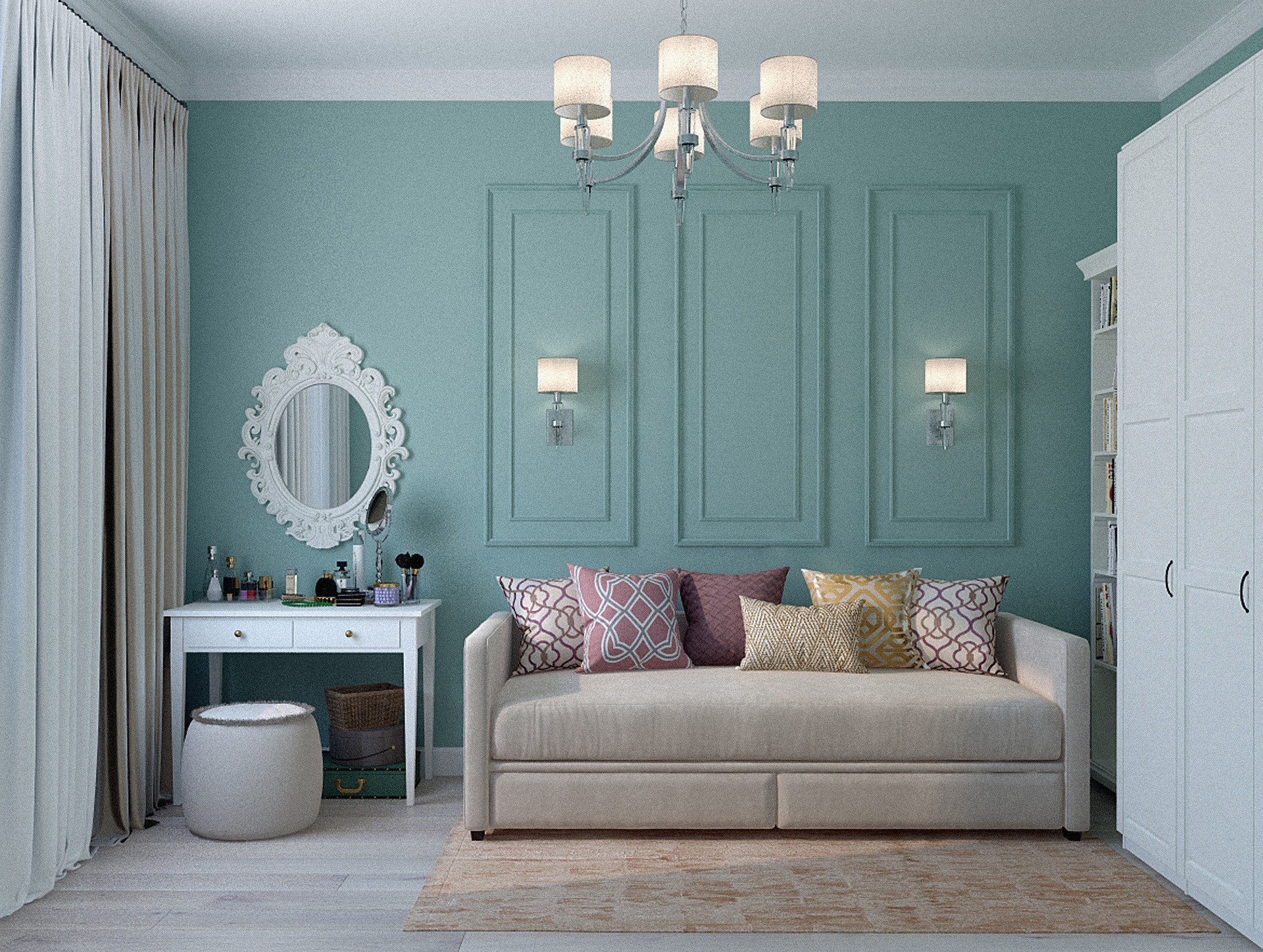
Small living room layout ideas can completely change how your space looks and feels.
When you’re working with a smaller room, the layout matters more than anything else. It’s what determines whether your space feels cramped or comfortable, cluttered or calm.
A thoughtful, cozy living room setup isn’t just about the furniture you choose, but how you arrange it.
The placement of your sofa, the flow of movement, and even how you use natural light all play a role in creating a space that feels open, functional, and inviting.
In this guide, you’ll find 15 layout ideas designed specifically for small spaces. If you are dealing with a narrow room, an awkward floor plan, or just looking for fresh front room inspiration, I am sure these ideas will help you make the most of your living room.
Let’s get into it 👇
But…
Wait…
Come follow me on Pinterest. I share all my small home living room ideas and cozy setups there first.
It’s where all the good stuff actually ends up.
Layout 1 – side Wall Sofa Layout (L shape)
If your small living room feels long, tight, and slightly awkward to decorate, this is the layout that quietly solves almost everything.
The idea is simple, but the effect is powerful.
Instead of trying to “fill” the room from every direction, you place your sofa along the longest wall and allow the rest of the space to breathe.
That one decision changes how the entire room feels.
This is one of those layouts that doesn’t try too hard, and that’s exactly why it works.
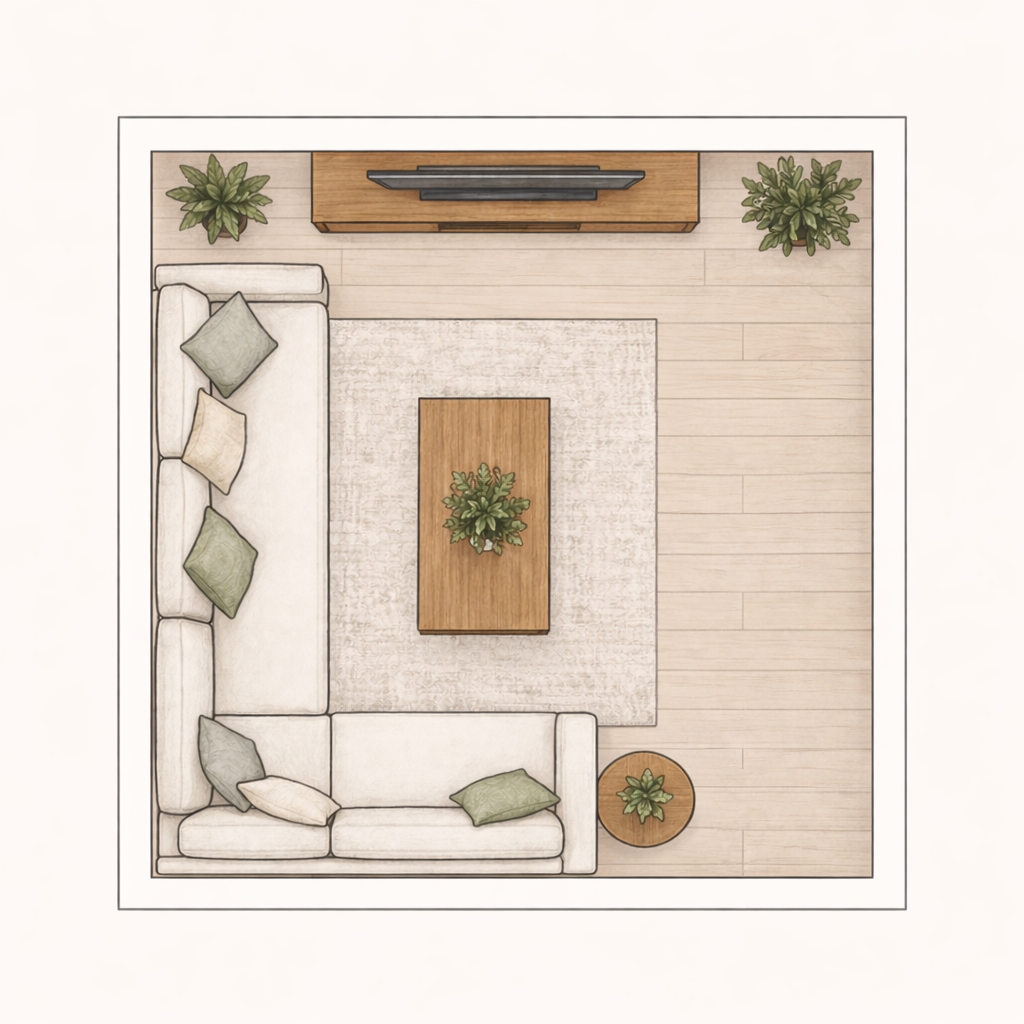
A narrow room already has a strong shape, whether you like it or not.
Most people make the mistake of fighting it by pulling furniture into the center or adding too many pieces, which only makes the space feel tighter and more confusing.
This layout does the opposite.
It follows the natural lines of the room, creating a clean, uninterrupted flow from one end to the other.
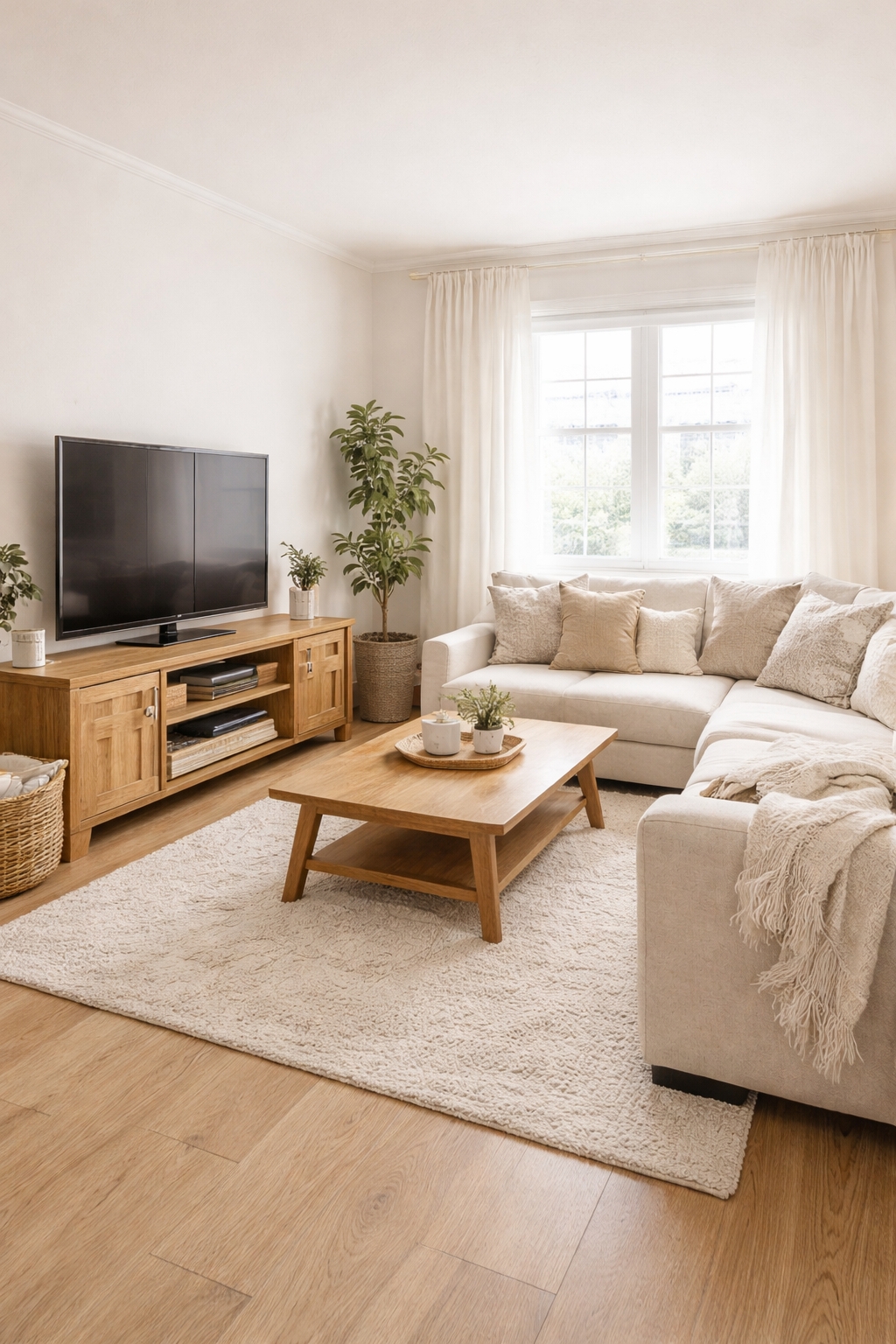
When your sofa sits along the wall, your eye can travel across the space without constantly stopping, and that alone makes the room feel wider.
There’s also something else happening here that people don’t immediately notice.
By keeping one side more open, you create a sense of movement.
You’re not squeezing between furniture or adjusting your path every few steps. The room feels easier to live in, not just nicer to look at.
And that’s really the difference between a layout that looks good and a cozy living room setup that actually feels good.
In a narrow space, color isn’t just aesthetic, it’s structural. It either softens the room or makes the shape more obvious.
This layout becomes instantly more inviting when you stay within warm, light tones that blend into each other rather than contrast sharply.
You can think of soft whites on the walls, creamy or taupe upholstery, light wood floors or tables, and muted greens or earthy accents. You should layer them naturally.
When everything feels slightly tonal and connected, the room stops feeling segmented. It starts to feel calm, which is exactly what you want in a smaller space.
Darker colors or heavy contrasts can work in larger rooms, but here they tend to visually “cut” the space and emphasize the narrowness instead of softening it.
It also works beautifully if you prefer a more minimal, intentional look rather than filling every corner with furniture. You’re not trying to make the room feel full, you’re trying to make it feel right.
This is the kind of layout that makes a room feel quietly put together.
layout 2 – Sofa facing tv
There’s a reason this layout shows up again and again in good front room inspiration.
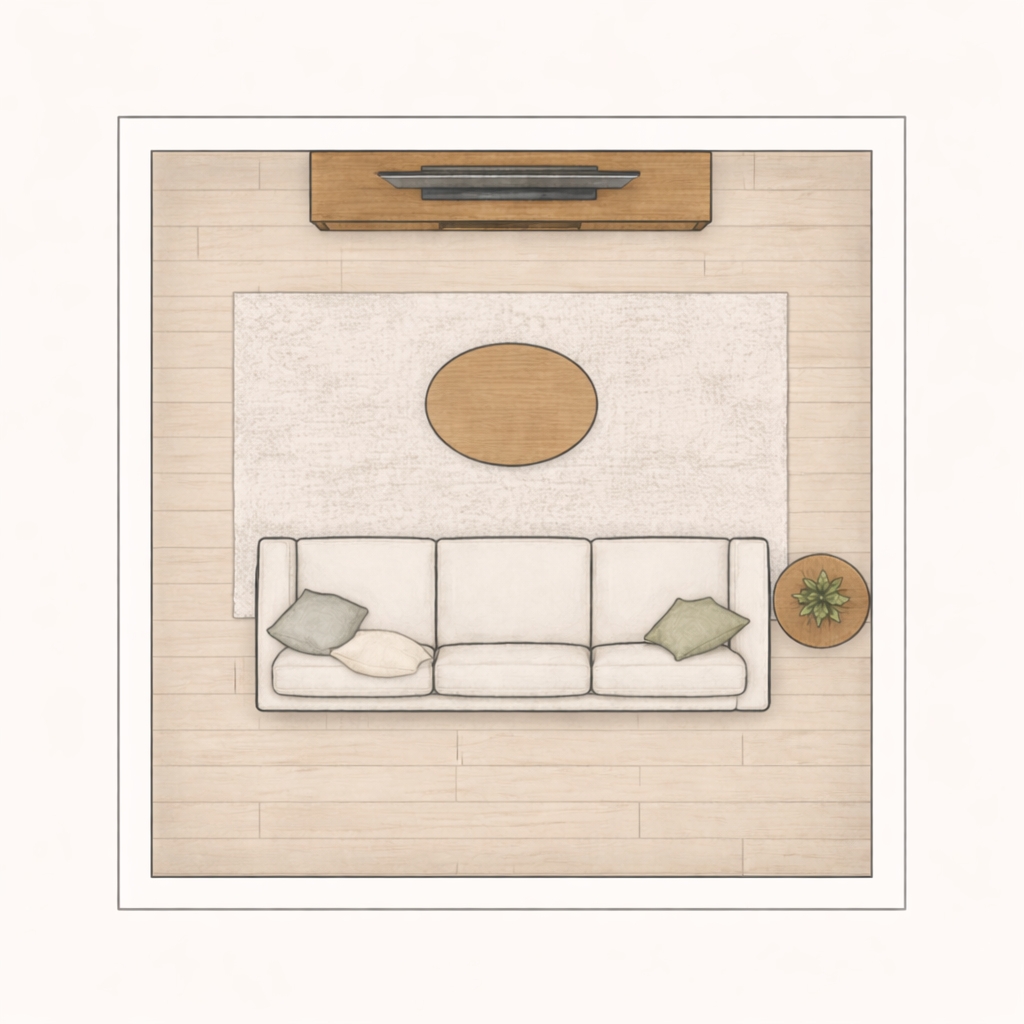
This is the most classic layout for a reason—it works.
In a small home living room, placing your sofa directly facing the TV creates a clear focal point and removes guesswork.
You know exactly where everything goes, and the room instantly feels organized.
Start by anchoring the TV on the main wall.
Keep it clean. You can either wall-mount your TV or place it on a slim console.
Then position your sofa directly across from it at a comfortable distance. This straight alignment keeps your cozy living room setup simple and easy to use every day.
The key to making this layout feel good, not basic, is spacing.
Don’t push the sofa too far back just because there’s a wall.
If you can, bring it slightly forward and place a rug underneath to define the seating area. That small move makes the room feel designed instead of just functional.
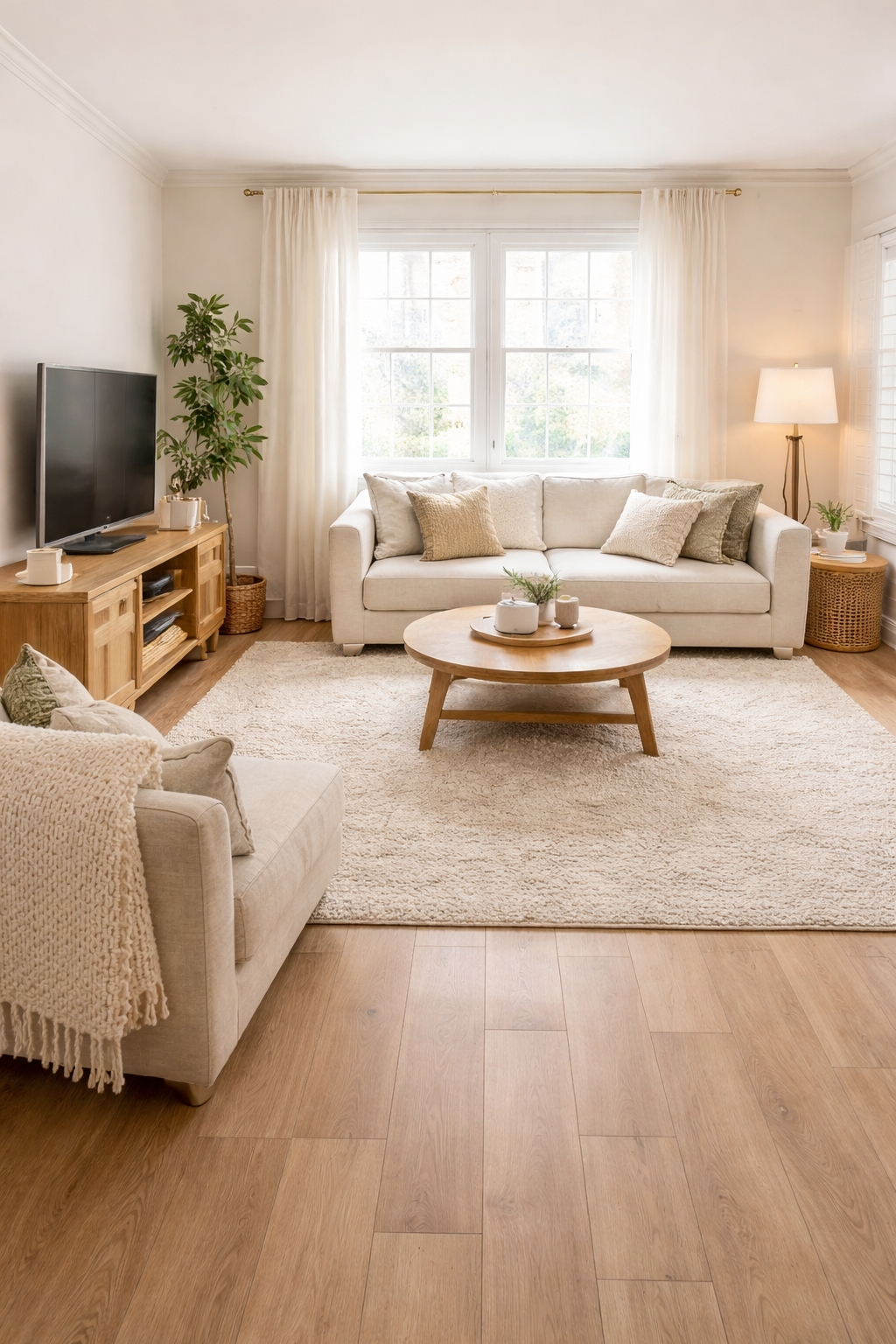
Choose furniture that fits the scale. A bulky sofa or deep media unit will quickly overwhelm a small space.
Go for clean lines, lower profiles, and pieces that don’t visually block the room.
Balance the setup with a few supporting elements.
A small side table, a floor lamp, or a single chair can complete the layout without crowding it. Keep everything intentional—every piece should earn its place.
Lighting should feel layered but soft.
Avoid placing lights directly near the TV. Instead, add a warm floor lamp beside the sofa or ambient lighting behind it to create a cozy evening atmosphere.
layout 3 – Two-chairs Facing sofa Layout
There’s something very different about a room where two sofas face each other.
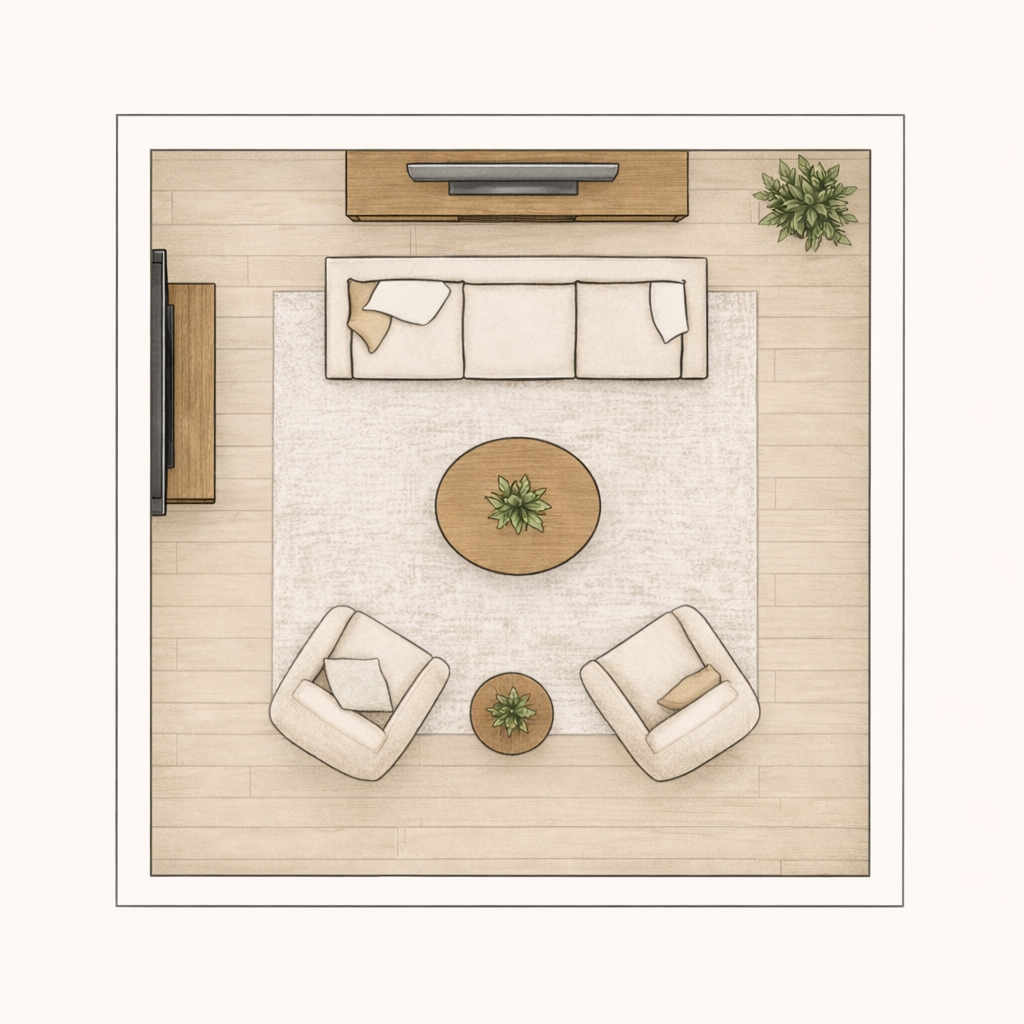
It immediately feels more intentional, more designed, and surprisingly, more spacious – even in a small home living room.
This layout works because it shifts the focus away from the walls and brings everything toward the center.
Instead of furniture being scattered or pushed outward, the room becomes about one clear moment: a shared, balanced seating area that feels grounded and complete.
The key to making this work in a smaller space is restraint.
The sofas should feel proportional, not oversized, and the distance between them should be just enough to allow a comfortable coffee table without squeezing the space.
What happens visually is subtle but powerful.
The eye no longer travels along the edges of the room, which is what often emphasizes size limitations. Instead, it settles in the middle, where everything feels connected.
That central zone becomes the heart of the room, and everything around it feels calmer as a result.
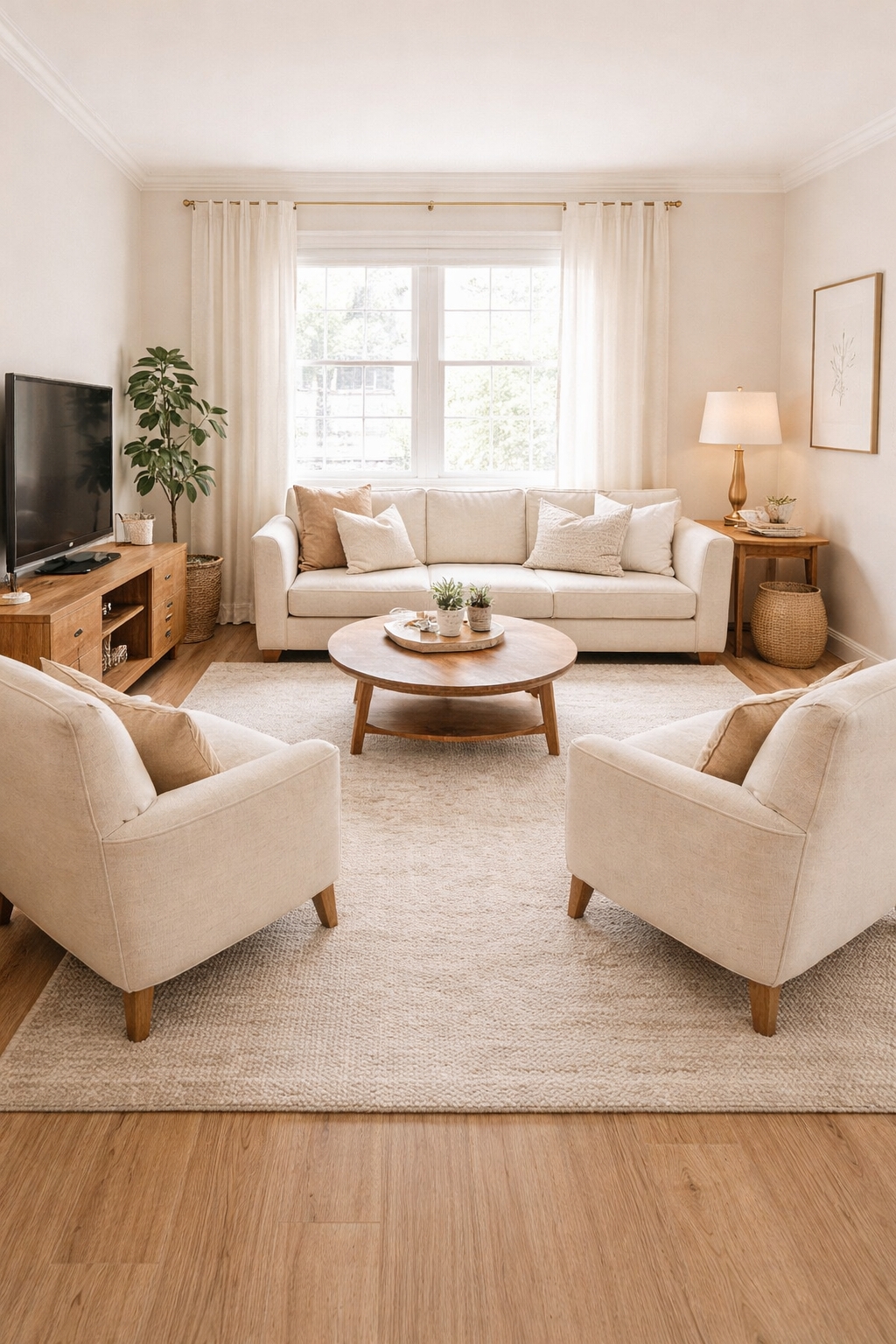
This is what transforms a simple arrangement into a true cozy living room setup.
There’s a quiet symmetry in this layout that instantly makes the space feel more refined.
You don’t need perfectly matched pieces, but there should be a sense of visual balance between the two sides.
A textured rug underneath both sofas helps anchor everything, while a single coffee table in the center keeps the layout from feeling busy.
Nothing needs to compete for attention, because the structure is already doing the work.
Spacing is what makes or breaks this layout.
If the sofas are too far apart, the connection is lost, and the room feels empty.
If they’re too close, it becomes tight and uncomfortable. But when the distance feels just right, the entire room settles into a rhythm that feels natural.
And that’s when this layout stops feeling like a design choice and starts feeling like a space you actually want to spend time in.
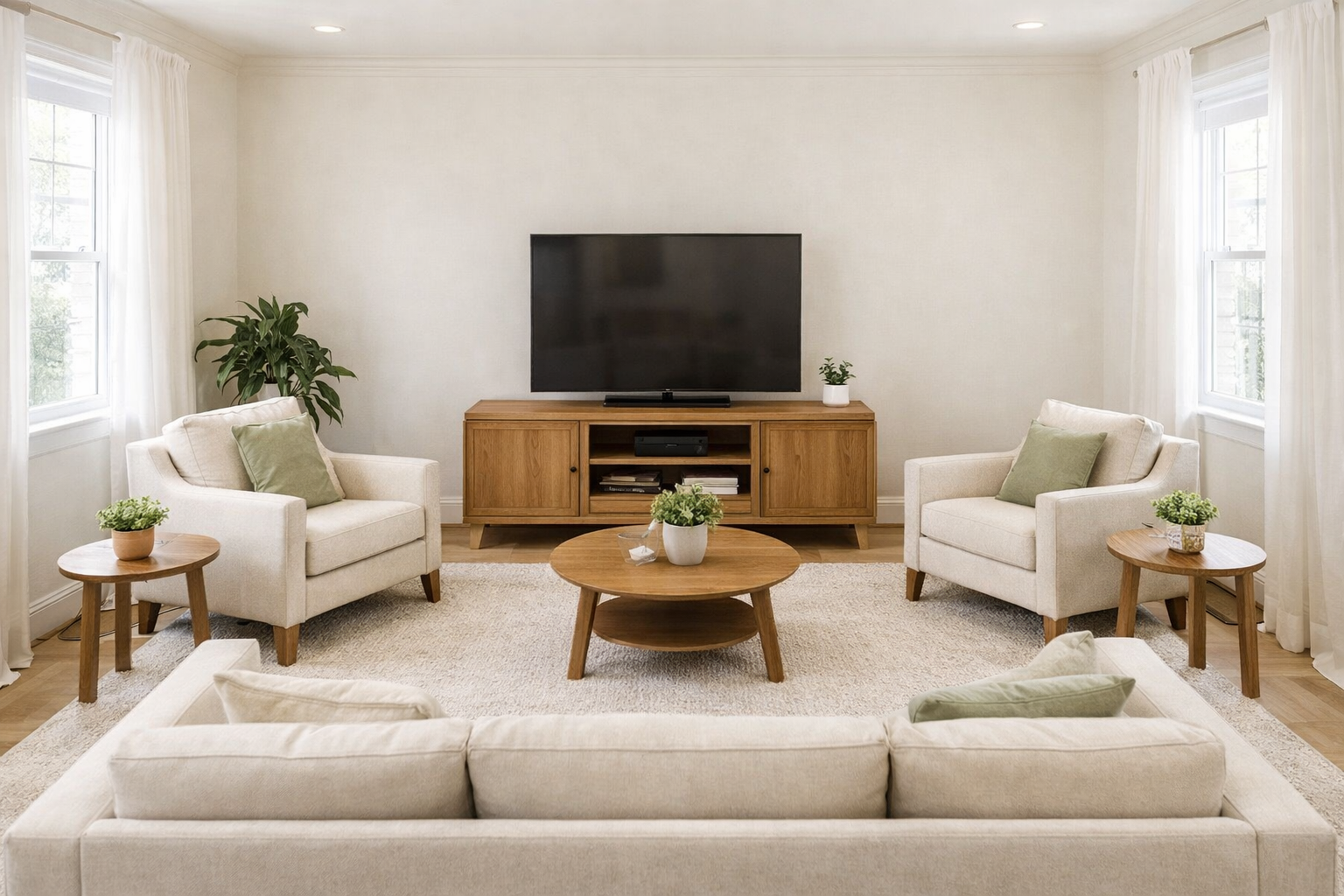
layout 4 – Sofa + Two Chairs Layout
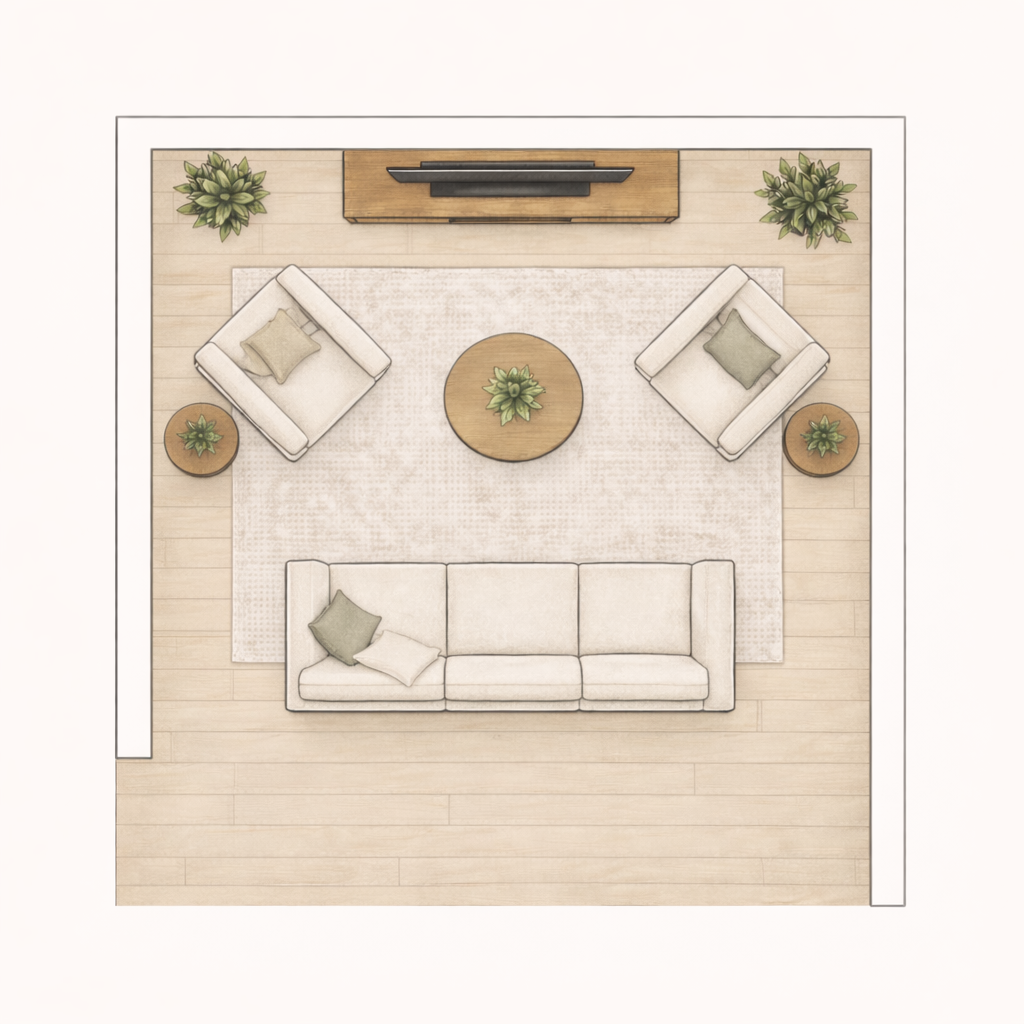
When you pair a sofa with two chairs, that creates something that a single seating piece never can.
There is a sense of balance that still feels relaxed. It gives you structure, but not the kind that feels too perfect or untouchable.
The room feels finished, but still easy to live in.
When you walk into a space like this, it doesn’t feel like everything was pushed into place just to fit. It feels considered.
layout 5 – Window-Focused Cozy Layout
This layout is all about making the window the star of your small home living room.
Instead of treating it like just another wall, you build your entire cozy living room setup around it.
The sofa typically faces the window or sits just beside it, so natural light becomes part of the experience, not something happening off to the side.
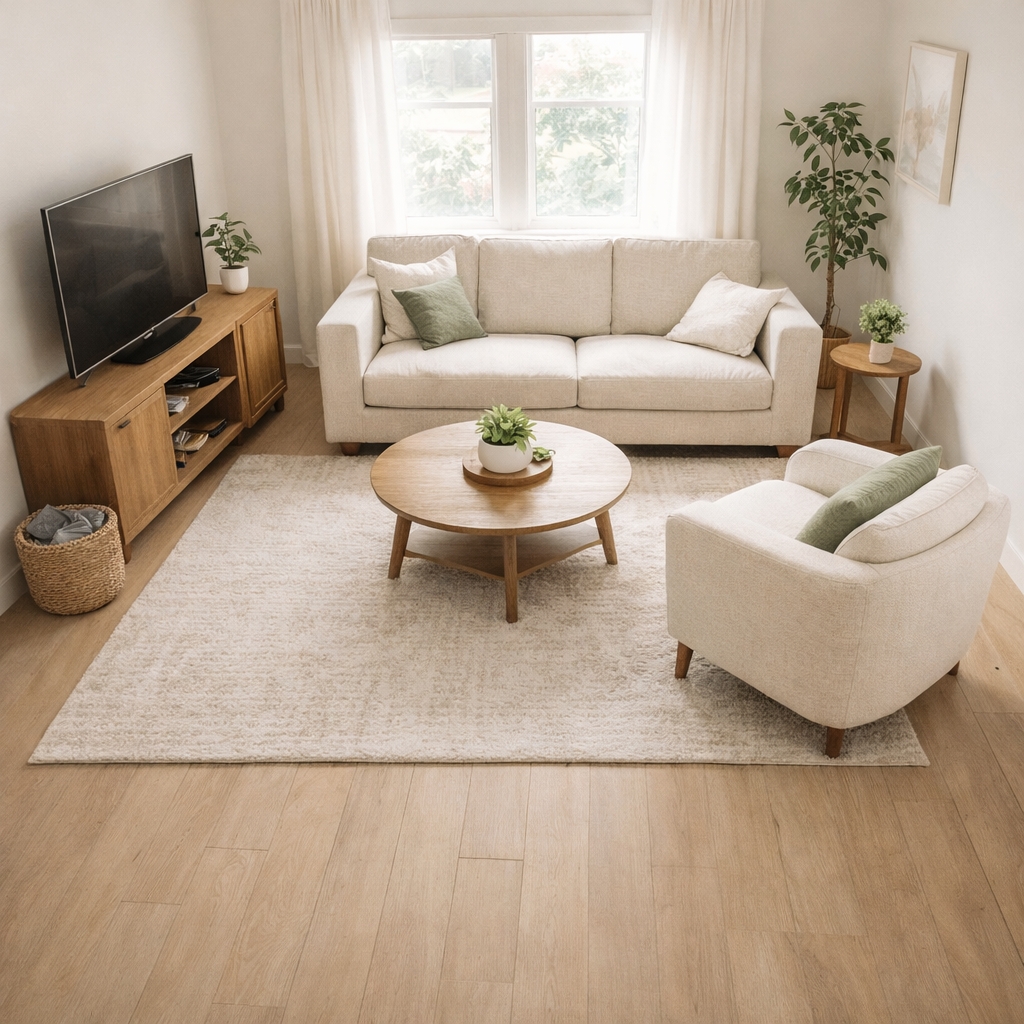
In a narrow or compact space, this instantly makes the room feel more open.
Your eye is naturally drawn outward, which creates that airy, calm feeling every front room inspiration board tries to capture.
It also gives you a built-in focal point without needing a TV or heavy decor to anchor the space.
The key is positioning.
If your window has a nice view or even just good light, placing your main seating directly across from it creates a soft, relaxed atmosphere.
If the room is tight, sliding the sofa slightly off-center (instead of perfectly blocking the window) keeps the flow natural and prevents the layout from feeling stiff.
Layering matters a lot here.
Since the window becomes the visual center, keep treatments light and intentional.
Sheer curtains or soft linen drapes let light filter through while still adding texture.
Heavy, dark curtains will fight against the whole purpose of this layout.
A small coffee table or ottoman should sit comfortably between the seating and the window without crowding the space. Think of it as a “pause point” rather than a barrier.
One of the smartest tips for this layout is to keep the area near the window slightly styled but not overloaded.
A simple chair, a small side table, or even a low bench can enhance the space without blocking light.
If you overcrowd that zone, the entire layout loses its calm, open feeling.
This setup works especially well if you’re trying to create that “effortlessly put together” look.
It doesn’t rely on expensive furniture or complicated arrangements. It’s about using what your space already gives you – light, openness, and a natural focal point and building around that in a way that feels soft, inviting, and lived-in.
layout 6 – Corner TV Space-Saving Layout
This layout is one of the smartest ways to make a small home living room feel bigger without sacrificing function.
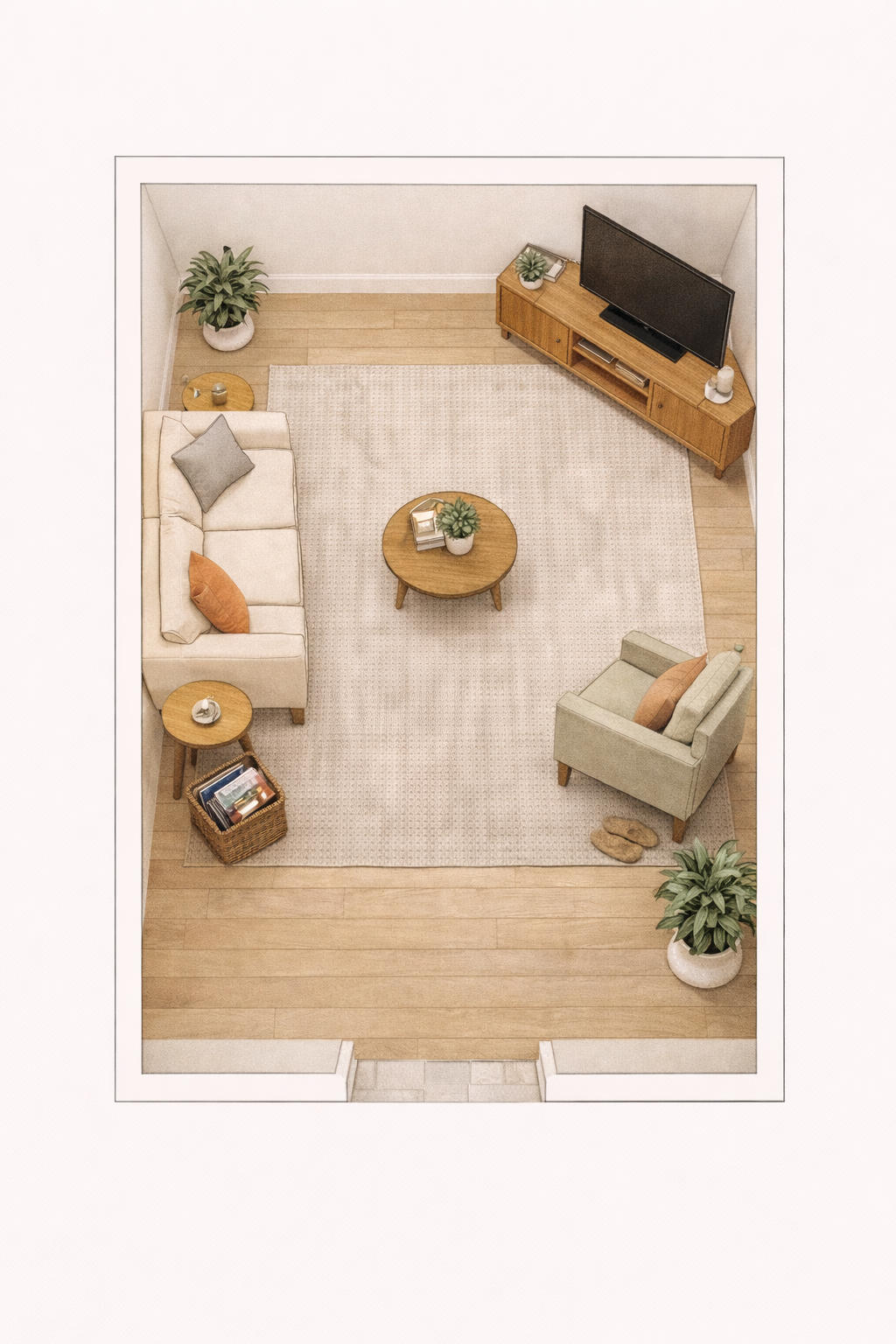
Instead of placing the TV flat against a main wall (which usually eats up your best space), you tuck it neatly into a corner.
That single shift opens up the rest of the room and gives you more freedom with your cozy living room setup.
The seating naturally angles toward the corner, which creates a softer, more relaxed flow compared to rigid, straight-on layouts.
A sofa can sit slightly diagonal or centered but turned toward the TV, while chairs or an ottoman can fill in the opposite side to balance things out.
This angled arrangement makes the space feel intentional rather than cramped.
One of the biggest advantages here is how much wall space you save.
In a narrow room, especially, keeping the longest wall clear allows you to add storage, decor, or even just breathing room, which is often what small spaces are missing. It’s a subtle shift, but it changes how the entire room feels.
Rugs play an important role in grounding the layout.
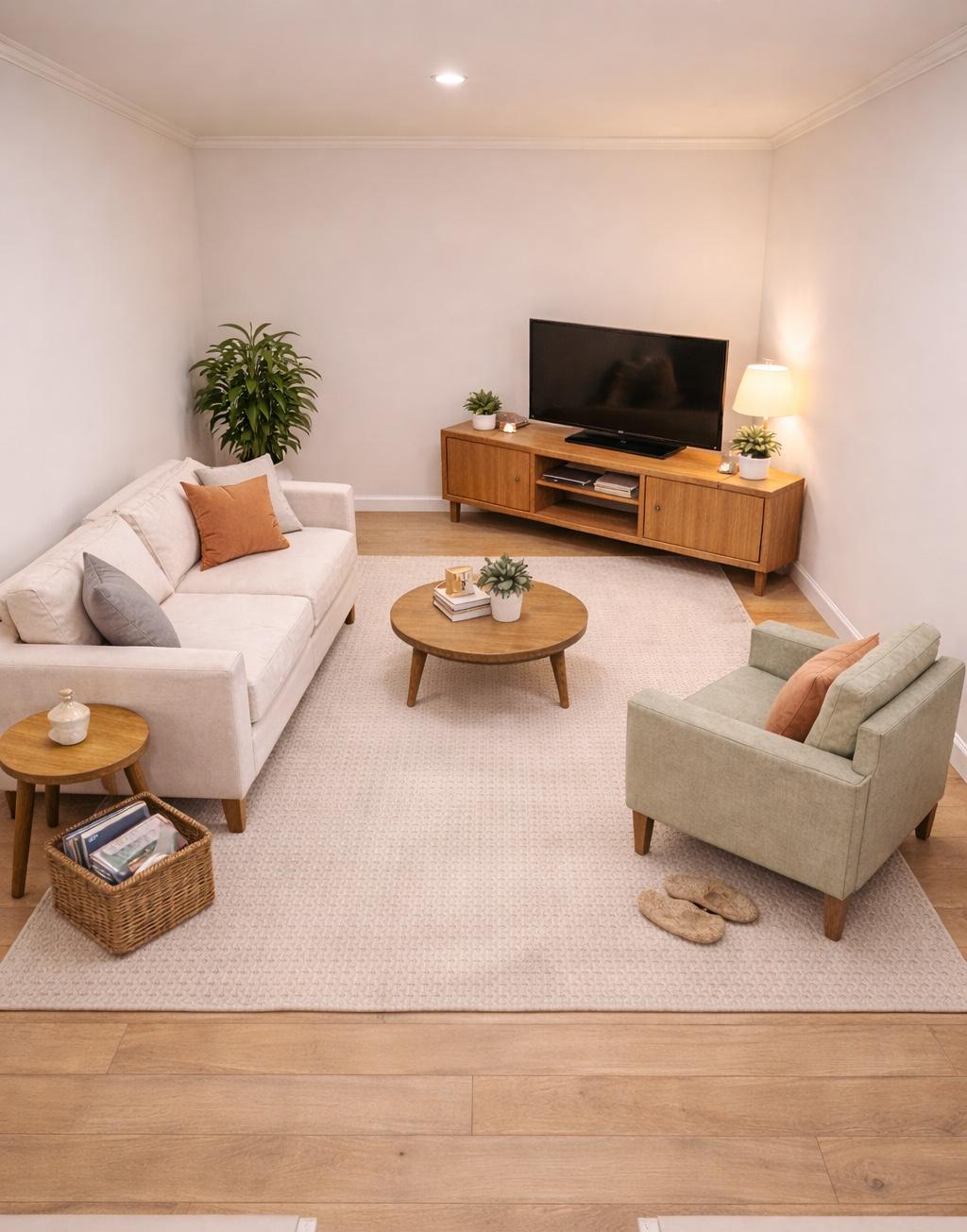
Instead of aligning the rug strictly with the walls, let it follow the seating direction. This helps everything feel connected, even though the layout is slightly angled.
Lighting should be placed to support both the TV and the seating area.
A floor lamp behind or beside the sofa works better than placing lighting near the TV, which can create glare and disrupt the cozy atmosphere.
Layout 7 – Side Wall Sofa Layout (Narrow Room Layout)
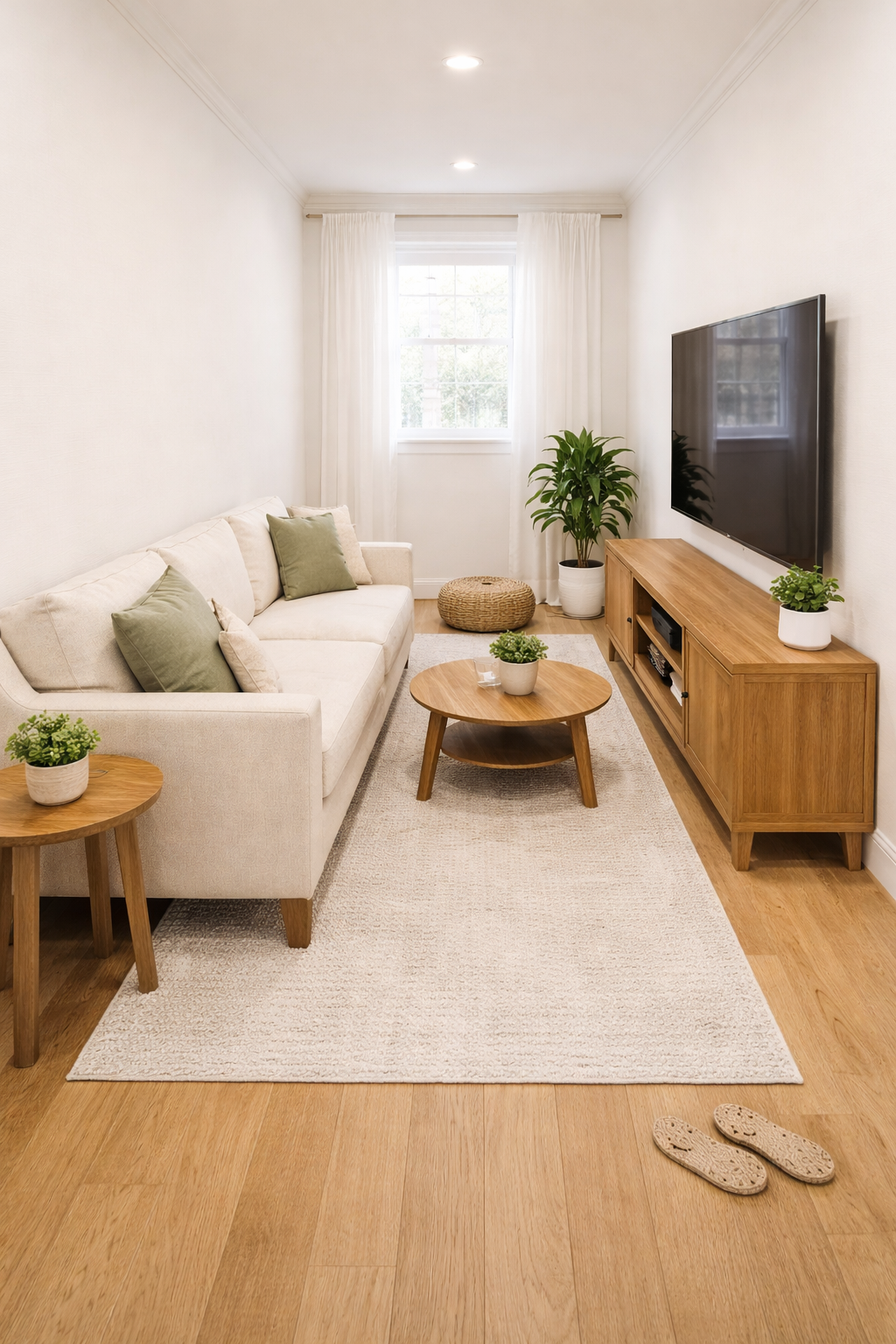
This layout is the easiest way to fix a narrow room without making it feel like a hallway.
By placing the sofa along the long wall, you instantly open up the center and create a clear, walkable path, something most small home living rooms are missing.
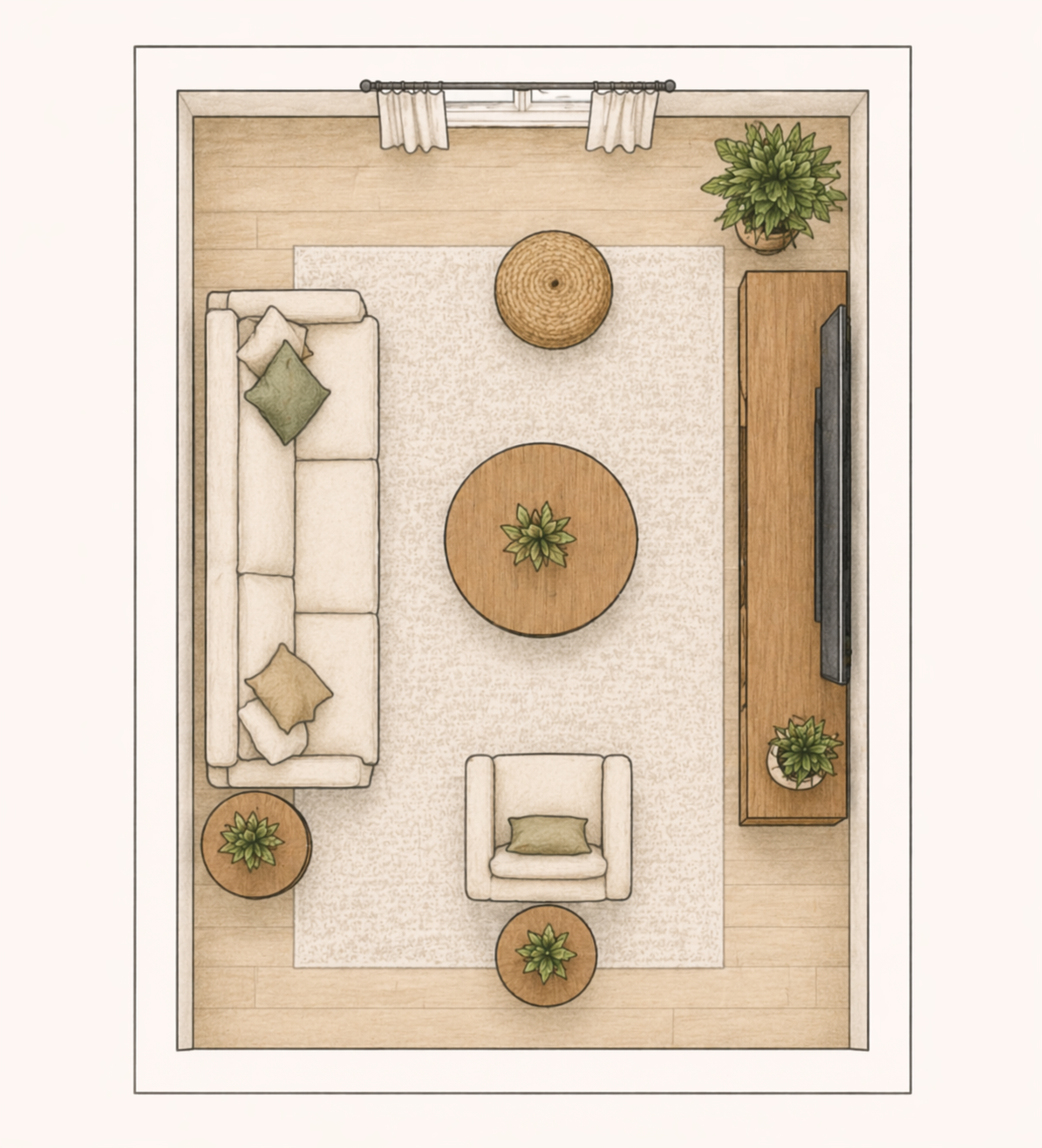
The biggest mistake here is pushing everything to the walls.
Instead, keep the sofa anchored on the side wall, but let other pieces float slightly. A slim coffee table or small ottoman should sit within reach, not far away, so the space still feels like a cozy living room setup—not just a passageway.
Go for a low-profile sofa with clean lines to avoid visual heaviness.
If you need extra seating, add a single chair at the end of the sofa or slightly angled across from it rather than mirroring the wall.
That small shift breaks the “tunnel” effect and makes the layout feel more intentional.
Keep furniture narrow and vertical where possible. You can think of slim consoles, wall-mounted shelves, and tall lamps.
This preserves floor space while still giving you storage and styling opportunities.
For the best front room inspiration look, use a rug that extends slightly under the sofa and into the open area. It visually pulls everything together and stops the room from feeling long and disconnected.
layer 8 – Open Walkway Layout
If your small home living room ever feels “off” and you can’t figure out why, it’s usually the flow. Not the sofa, not the decor—the pathway.
That’s exactly what this layout fixes.
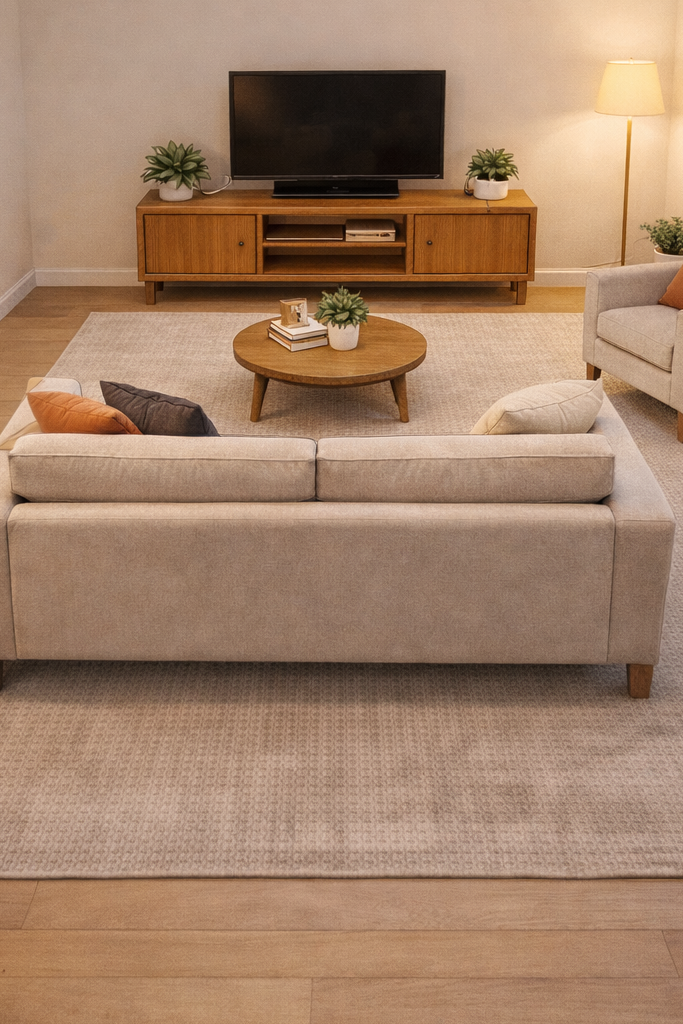
An Open Walkway Layout is all about keeping a clear, easy path through the room.
Instead of blocking movement with furniture, you create space for it.
The most common way to do this is by slightly floating your sofa or shifting it just enough so there’s a natural walkway behind or beside it.
And here’s the thing people don’t realize: this instantly makes your cozy living room setup feel bigger.
When your eye can move freely (just like you do physically), the whole room feels lighter and more put-together.
The key is not overdoing it.
You don’t need a huge gap—just enough space to comfortably walk through without brushing against furniture. Even a small adjustment can completely change how the room feels.
Keep the walkway visually clean.
Avoid placing bulky tables, baskets, or decor in that path. Instead, focus your styling in the main seating area.
That’s where your rug, coffee table, and layered textures should live—anchoring the space without interrupting flow.
One of my favorite tricks for front room inspiration is using the back of the sofa as a soft divider. You can leave it minimal or add a slim console table for a styled look without closing off the space.
It’s a subtle layout, but it makes a huge difference.
The room feels calmer, more intentional, and honestly just easier to live in—which is exactly what a good layout should do.
layout 9 -Minimalist Small Space Layout
A small living room often feels crowded, not because of its size, but because of how much is inside it.
This layout shifts the focus to less, but better, creating a space that feels calm, open, and intentionally styled.
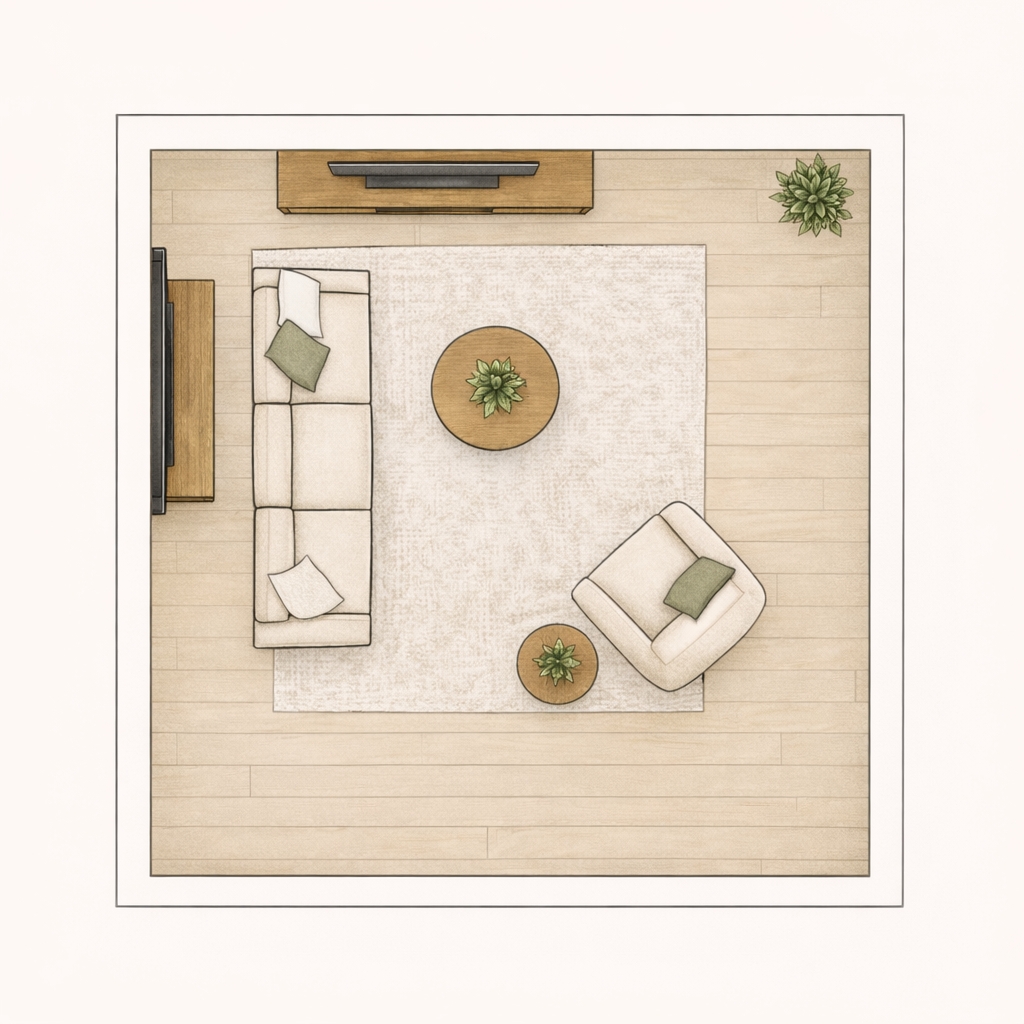
The foundation of a cozy living room setup here is simplicity.
Stick to the essentials—a well-sized sofa, a clean-lined coffee table, and a couple of carefully chosen accents.
Every piece should have a purpose, either functional or visual. Anything that doesn’t add to the space quietly works against it.
Spacing is just as important as furniture.
Leaving breathing room between pieces allows the layout to feel light and effortless rather than packed.
That negative space is what gives you that polished, high-end front room inspiration look without adding anything extra.
Scale becomes your best tool.
Low-profile furniture, slim arms, and pieces with visible legs keep the room from feeling heavy. Even small swaps like choosing a sleek side table instead of a bulky one can completely change how open the space feels.
Color and texture should stay soft and cohesive.
Neutral tones layered with subtle textures create warmth without visual clutter. This keeps the room minimal, but still inviting.
The real secret to this layout is restraint.
Instead of asking “what else can I add?”, the better question becomes “what can I remove?” T
hat shift is what transforms a small space into something that feels intentional, elevated, and easy to live in.
layout 10 – Window-Centered Soft Layout
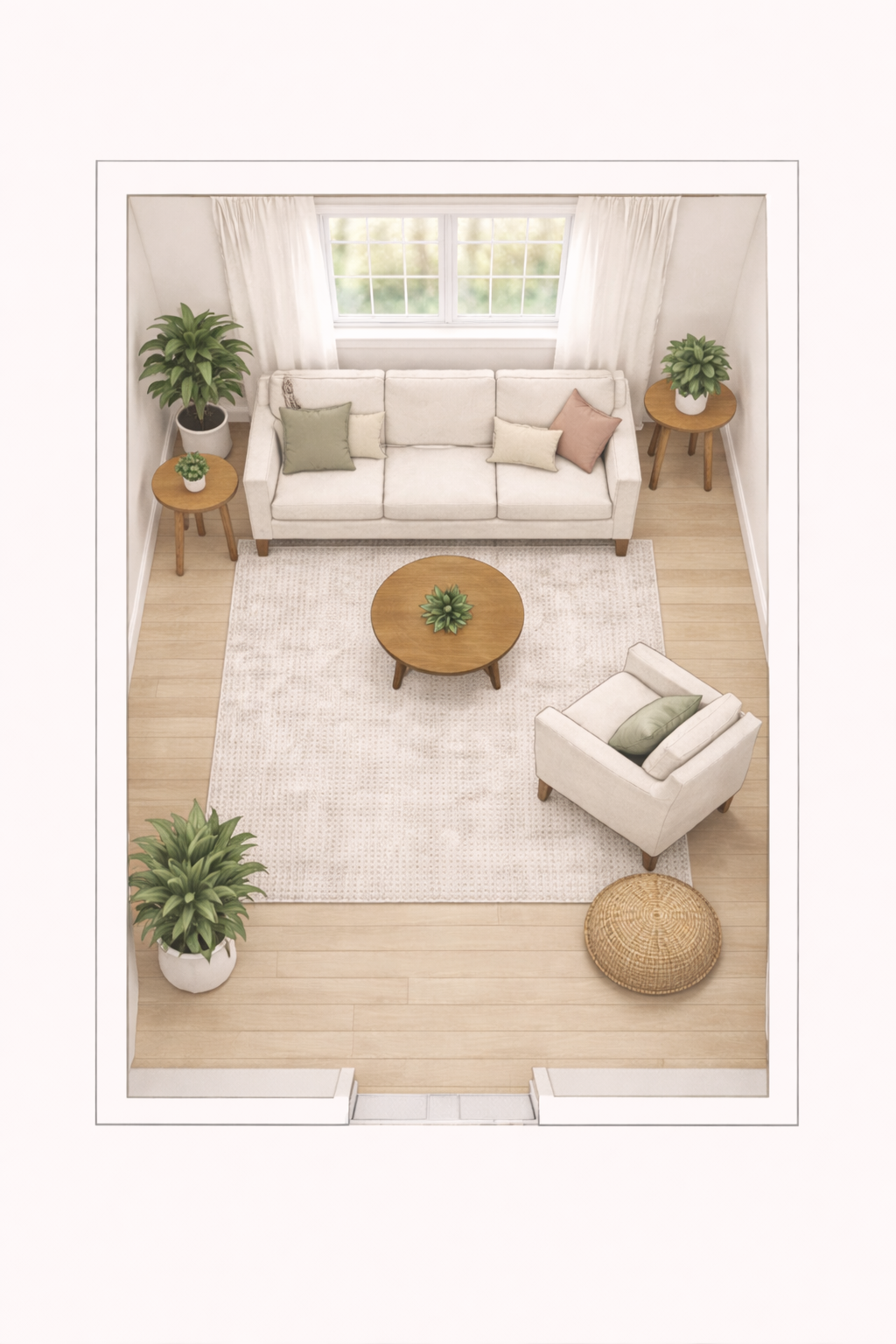
You can create a calm, inviting feeling in your small home living room with this layout.
You use your window as the anchor and build everything around it in a soft, balanced way.
Place your sofa so it lines up with the window or faces it directly.
This instantly brings structure into the space without making it feel rigid.
You don’t need perfect symmetry, just enough alignment to make the room feel intentional.
Keep your cozy living room setup light and layered.
Choose soft fabrics, warm neutrals, and gentle shapes. Linen curtains, textured cushions, and slightly rounded furniture help you soften the overall look and make the light feel diffused and cozy.
Protect the window area.
Don’t block it with bulky furniture or heavy decor.
Let natural light flow freely, because that’s what gives this layout its signature airy feel.
Add small pieces that support the setup without overpowering it. A slim coffee table, a light rug, or a subtle side chair can complete the space while keeping everything visually calm.
This layout works so well for front room inspiration because it feels effortless. You don’t rely on too many elements—you simply use light, balance, and softness to make the room feel styled and comfortable.
layout 11 – Floating Sofa Layout
You can completely change how your small home living room feels just by pulling the sofa off the wall.
This layout centers the sofa within the space and instantly makes the room feel more designed, less “pushed to the edges.”
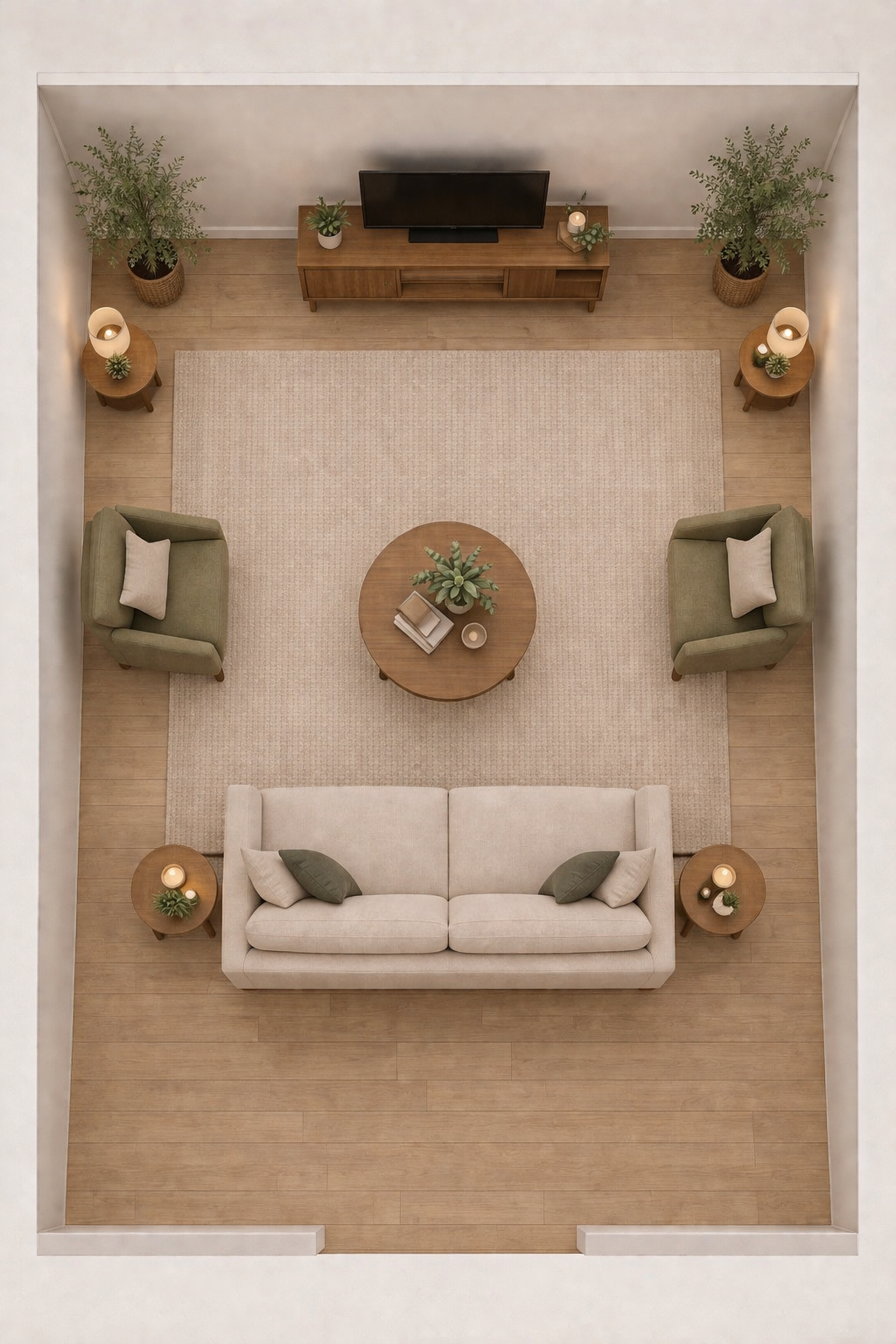
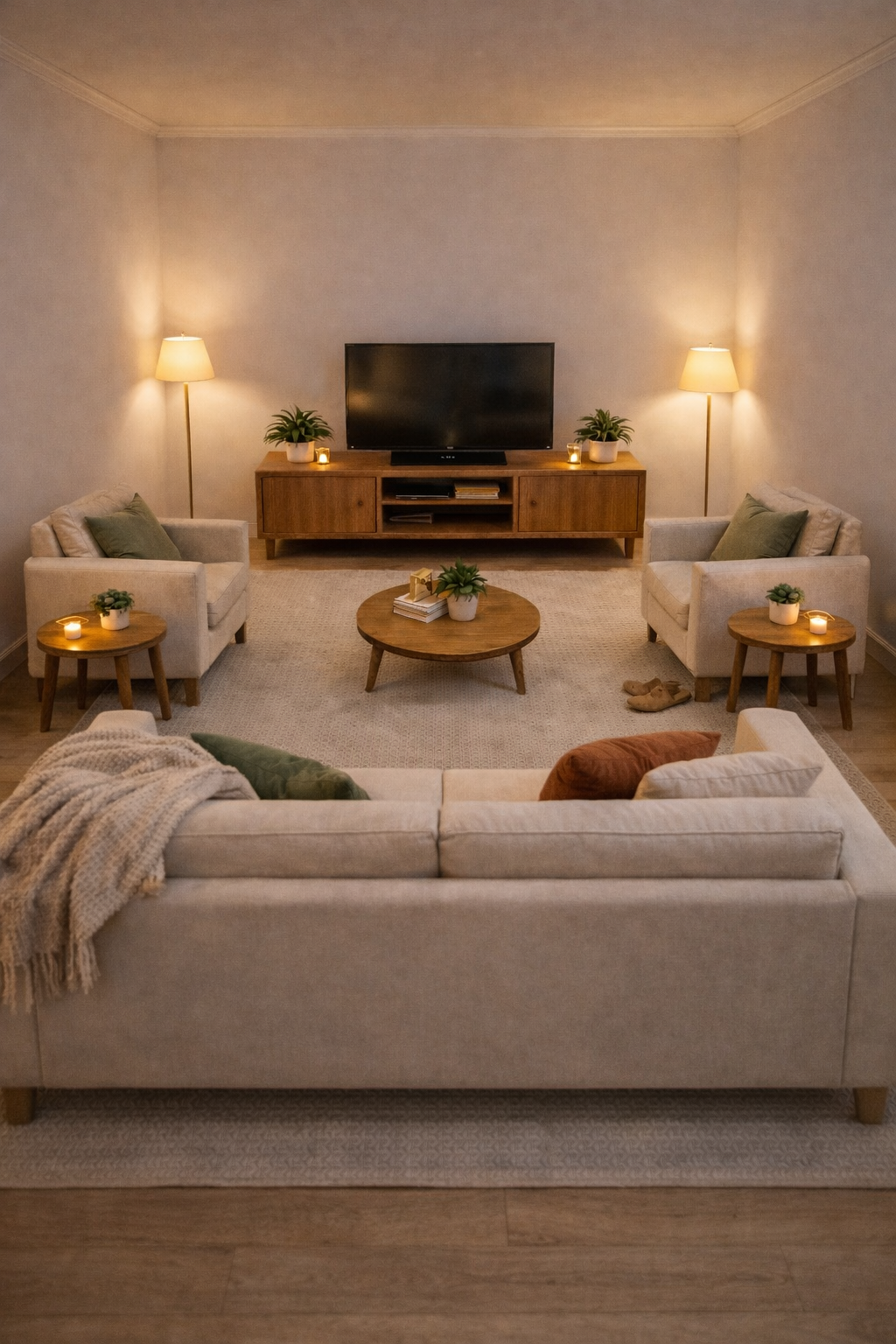
Start by placing your sofa a little forward—enough to create space behind it.
That gap becomes useful.
You can turn it into a walkway, or keep it open to give the room breathing room. Either way, you break that tight, boxed-in feeling most small spaces have.
Your cozy living room setup should form around the sofa, not the walls.
Add a coffee table and a rug to anchor the seating zone right in the middle of the room. This creates a clear “living area” instead of everything blending into one long space.
Use the back of the sofa as an opportunity.
A slim console table, a floor lamp, or even just a clean, open line can define the layout without closing it off.
This is one of the easiest ways to make your space feel layered and intentional.
Keep the surrounding furniture light and flexible.
A single chair, a pouf, or a small side table works better than bulky pieces.
You want the layout to feel open from every angle, not crowded.
This setup works especially well for front room inspiration because it feels elevated without trying too hard.
You’re not adding more—you’re just placing things smarter, and that shift makes the entire room feel bigger, calmer, and more put together.
layout 12 – Diagonal TV Layout (Corner Angle Layout)
You can soften a small home living room instantly by turning your layout on a slight angle.
Instead of centering everything up with the walls, you place the TV in the corner and let your seating follow that diagonal.
This breaks the boxy feel and gives your cozy living room setup a more relaxed, natural flow.
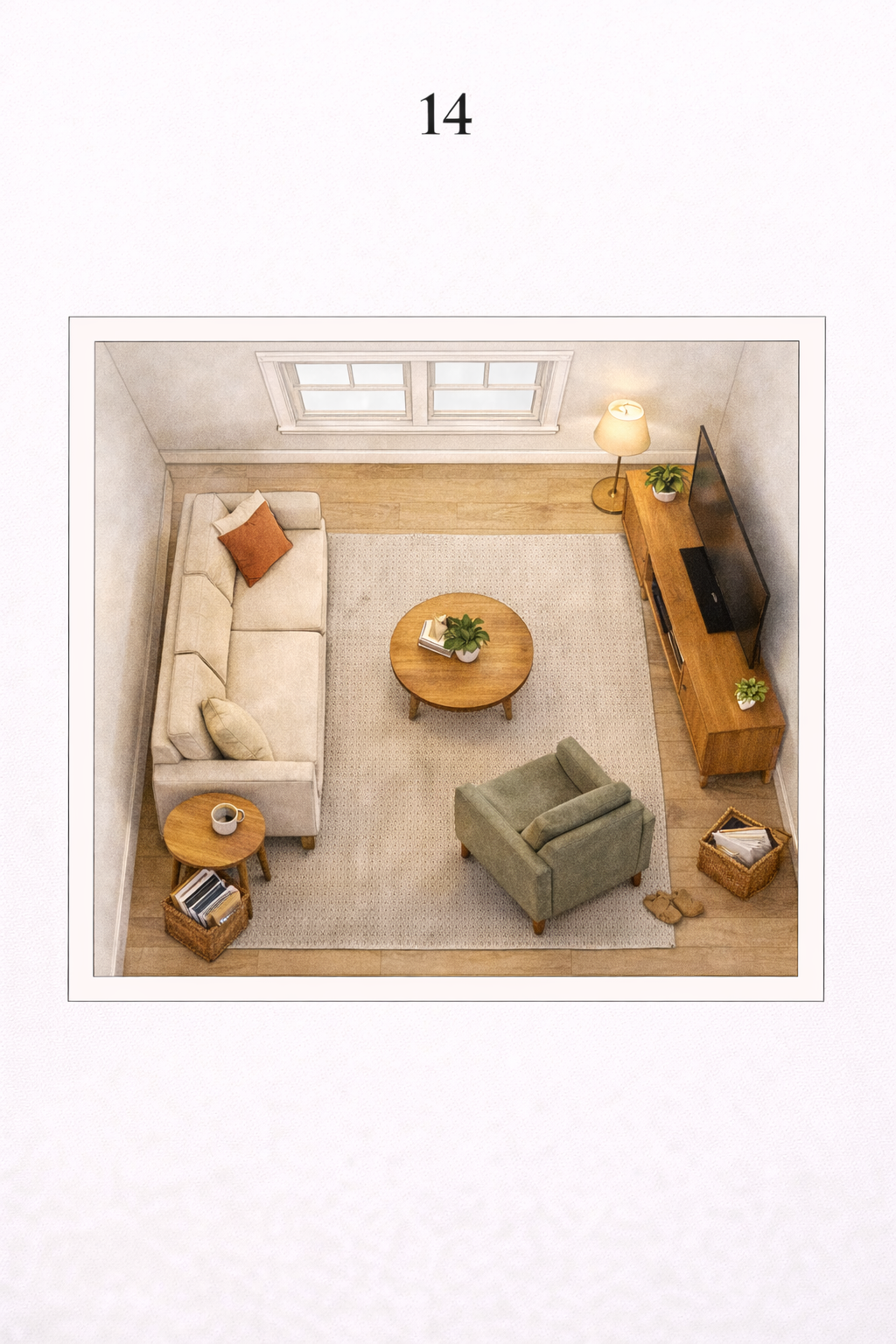
Start with the TV.
Mount it or place it in the corner at a comfortable viewing angle, then position your sofa to face it—not perfectly straight, but slightly turned.
That small shift makes the whole room feel less rigid and more designed.
Balance matters here.
Since angles can feel visually busy, keep your furniture shapes clean and simple.
A straight-lined sofa works better than something overly bulky. You can soften the look with a rounded chair or an ottoman to contrast the angles and keep the space inviting.
Lighting should feel warm and layered.
A floor lamp placed near the sofa (not the TV) keeps the focus on the seating area and avoids glare.
Soft, ambient lighting helps balance the sharper angles of the layout.
Rugs become your anchor in this setup.
Instead of aligning the rug with the walls, align it with your seating direction. This ties everything together visually and makes the angled layout feel intentional rather than accidental.
Keep wall decor simple and slightly asymmetrical.
A perfectly centered gallery wall can fight against the diagonal flow, so opt for art that follows the movement of the room or keep one wall minimal for visual rest.
For a strong front room inspiration look, mix textures rather than adding more items. Linen, wood, soft knits, and a touch of matte metal can give depth without cluttering the space.
This layout works because it quietly fixes two problems at once—it saves space and adds visual interest.
You don’t need more furniture or decor. You just change the direction, and suddenly the room feels styled, balanced, and much more inviting.
layout 13 – Symmetrical Cozy Layout
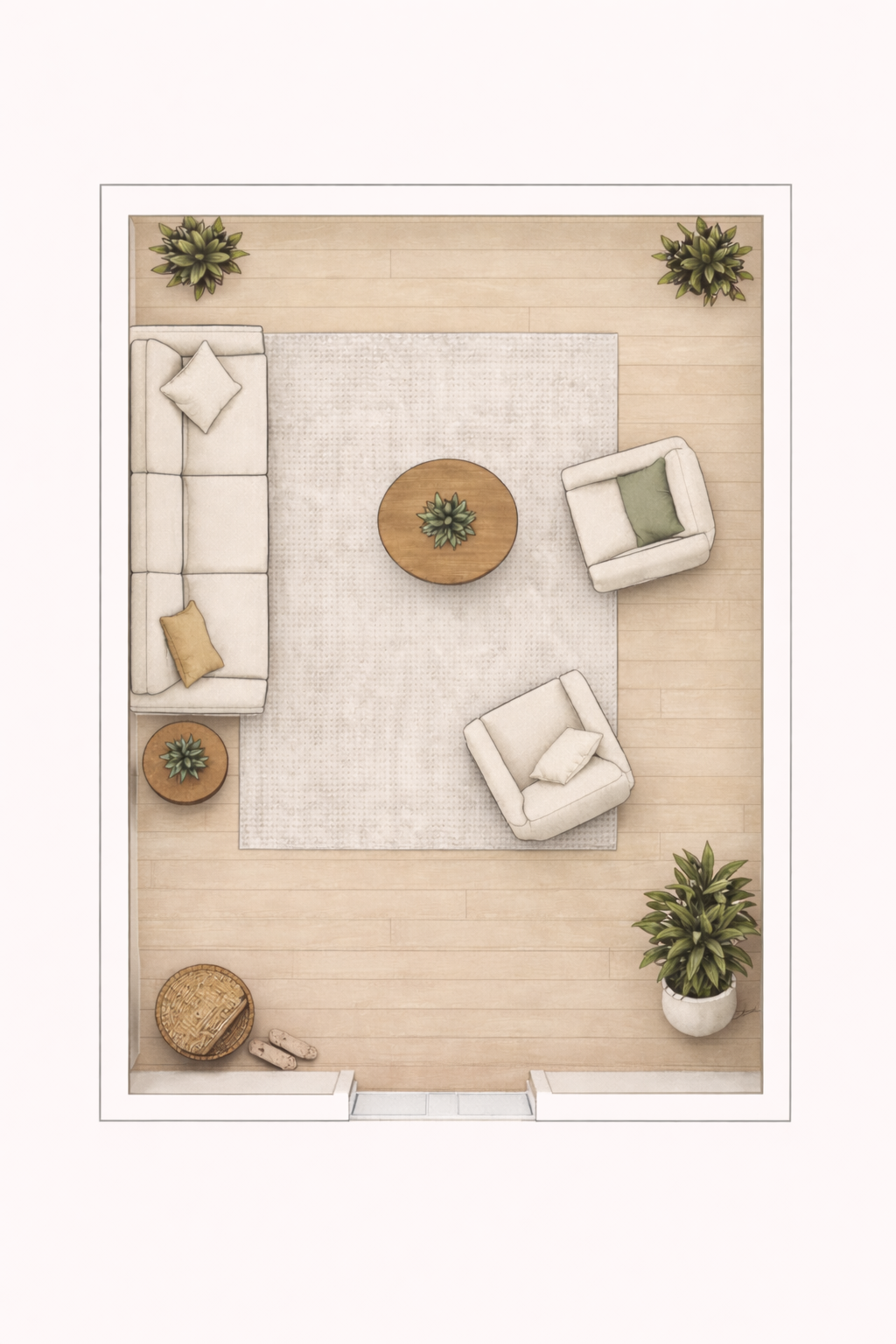
A symmetrical cozy layout gives your small home’s living room instant structure and calm.
You build the entire space around balance, so everything feels aligned, intentional, and easy to live in.
Start with a clear center point.
This can be a sofa, a window, or a TV—something that anchors the room. From there, place matching or visually similar elements on each side.
Think two chairs, two lamps, or even balanced decor. You don’t need identical pieces, but they should carry the same visual weight.
Keep your cozy living room setup simple so the symmetry can actually stand out. Too many pieces will break the balance and make the room feel busy.
A sofa, a pair of chairs, and a well-sized coffee table usually create the perfect foundation.
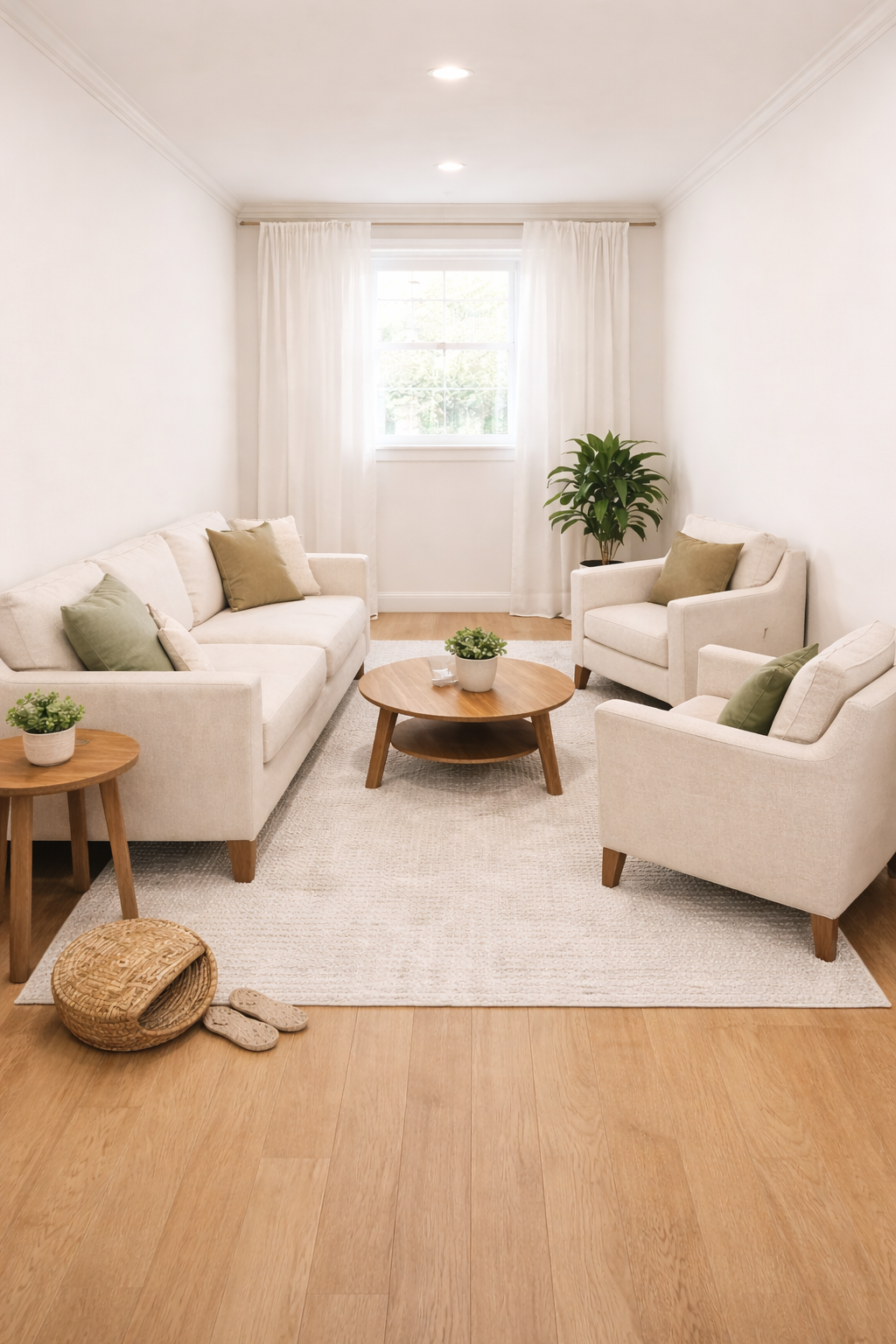
Soften the structure with texture.
Symmetry can feel rigid on its own, so layer in cushions, throws, and a soft rug to bring warmth into the space. This is what turns a balanced layout into something that still feels comfortable and inviting.
Use color intentionally.
A neutral base—like warm beige, cream, or soft gray—keeps the room calm. Then repeat accent tones across both sides of the room.
Even small details, like matching pillow colors or similar decor, help reinforce that balanced look without making it feel forced.
Place lighting evenly.
Matching lamps or sconces on each side creates a soft, even glow and strengthens the symmetry, especially in the evening when lighting defines the mood.
layout 14 – Window + Side TV Hybrid Layout
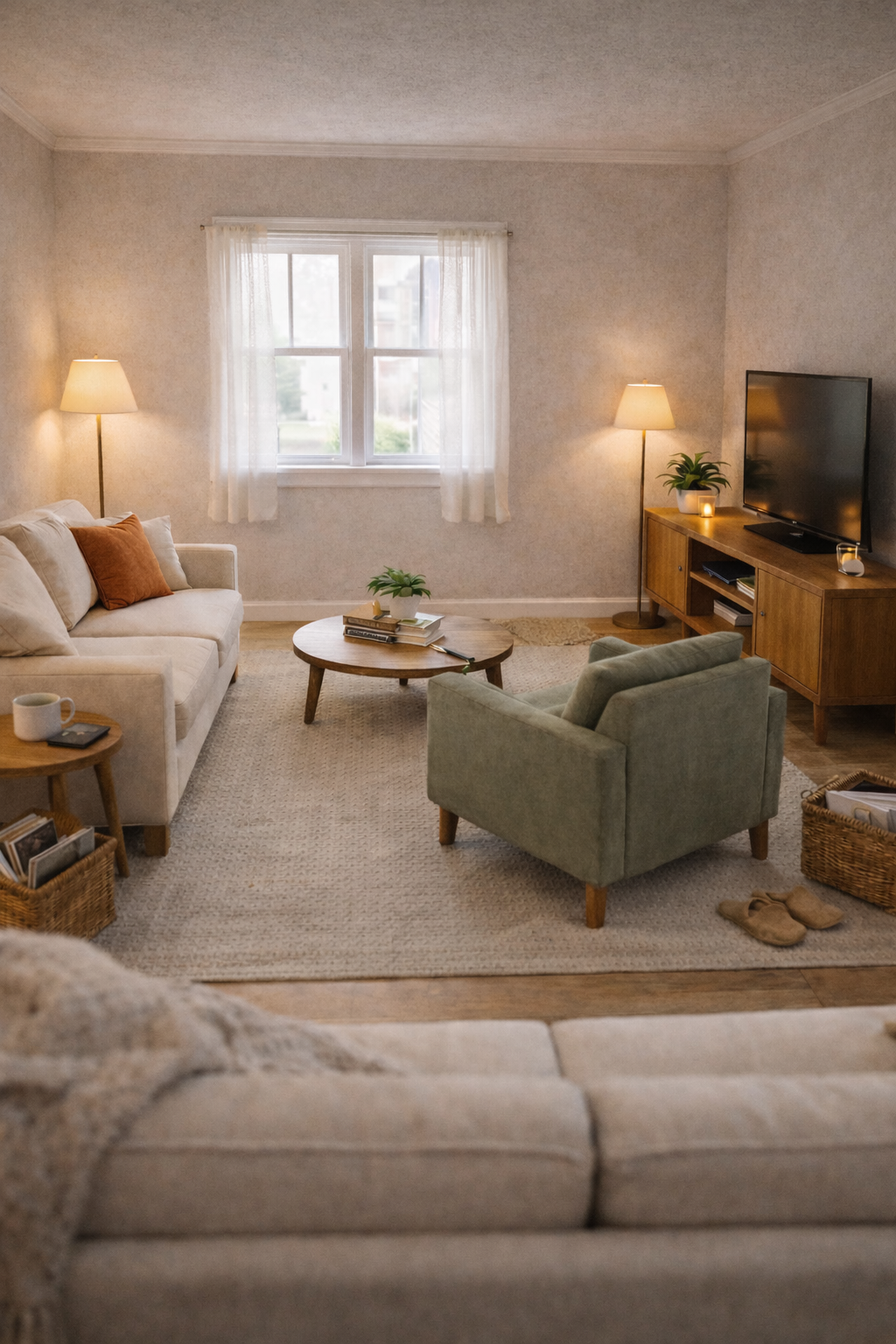
This layout solves one of the most common problems in a small home living room—you want to enjoy the window and watch TV without one ruining the other.
The solution is simple: let the window lead the space, and place the TV off to the side.
Position your sofa so it connects to both.
It can face the window directly with a slight turn toward the TV, or sit centered while the TV stays angled on a side wall.
That small adjustment keeps the room feeling open and light, while still making the setup practical.
Keep the window area soft and airy. Use light curtains, minimal decor, and avoid blocking the natural light.
This keeps your cozy living room setup feeling fresh during the day instead of being dominated by the TV.
Treat the TV zone as secondary. Mount it on a side wall or place it on a slim console so it doesn’t visually compete with the window. A dark, bulky unit will pull attention away from the natural focal point and make the room feel heavier.
Balance the layout with subtle elements.
A chair or side table can help connect both sides of the room so it doesn’t feel split.
The goal is to make everything flow together instead of creating two separate zones.
Color makes a big difference here.
Keep a soft, cohesive palette, warm neutrals, light woods, and muted tones to tie the whole space together.
You can add a bit of contrast near the TV area, but keep it controlled so it doesn’t overpower the room.
Lighting should support both moments. Let natural light take over during the day, then add a warm floor lamp near the seating area for the evening. Avoid placing strong lighting near the TV to prevent glare.
This layout works so well for front room inspiration because it feels realistic. You don’t have to choose between beauty and function. You get both, and the room still feels calm, balanced, and easy to live in.
layout 15 – Soft Angled Cozy Layout
You can make a small home living room feel instantly more relaxed by turning your furniture just slightly off-axis.
A soft, angled layout avoids harsh diagonals and instead uses gentle shifts. Just enough to break the straight lines without making the room feel chaotic.
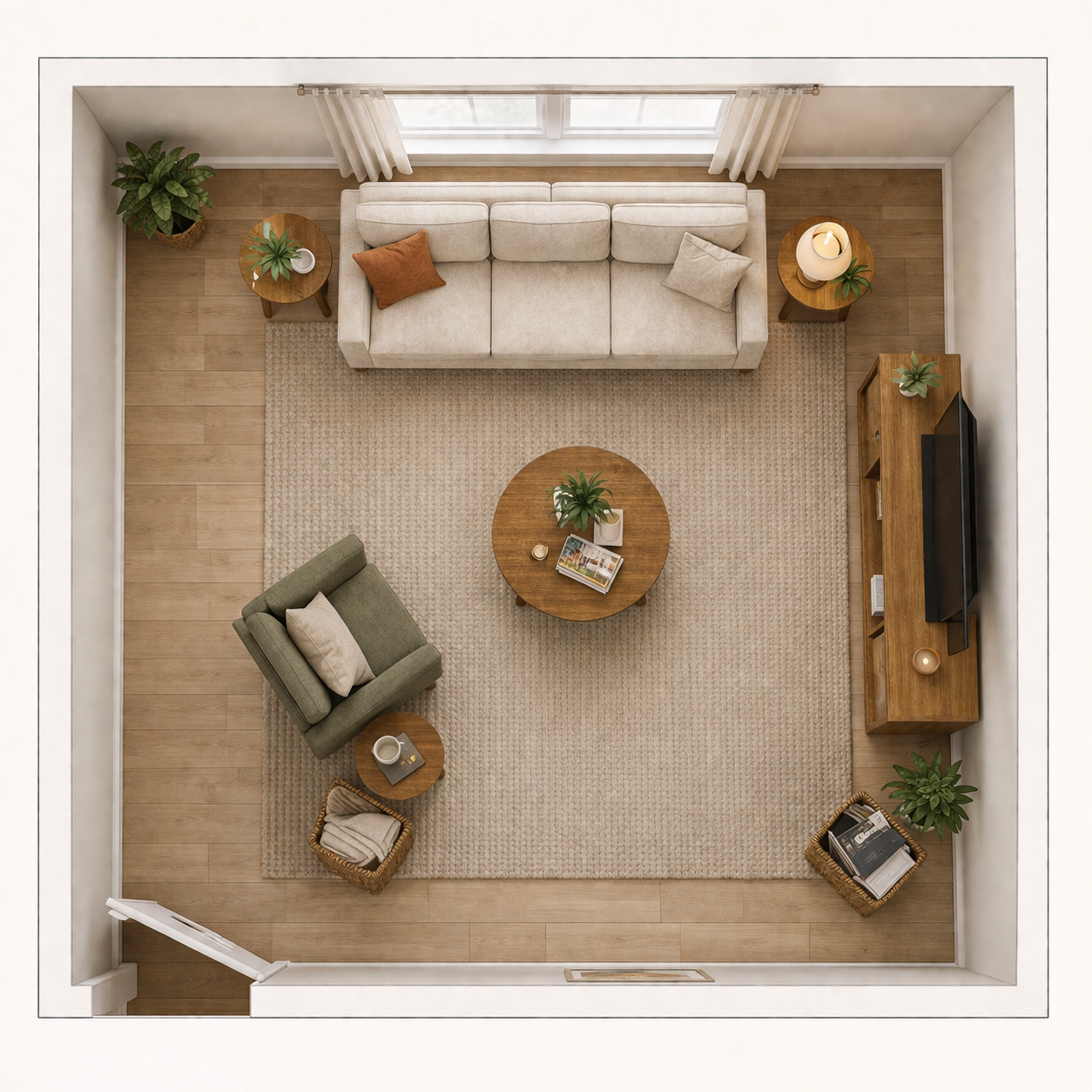
Start with your main piece. Angle the sofa a few degrees toward your focal point (TV, window, or coffee table), not fully diagonal.
That subtle turn creates a more natural, conversational flow and opens up the space visually.
Keep the layout controlled.
Once you angle the sofa, let one secondary piece follow that direction, a chair, an ottoman, or even your rug. Don’t angle everything. Too many competing lines will make the room feel messy instead of soft.
Use a rug to ground the setup.
Place it slightly aligned with the seating rather than the walls. This helps the layout feel intentional and ties all the pieces together.
Choose shapes that soften the look.
Since you’re introducing angles, balance them with curved or rounded elements like a round coffee table, soft-edge armchairs, or a textured pouf. This keeps your cozy living room setup feeling warm instead of sharp.
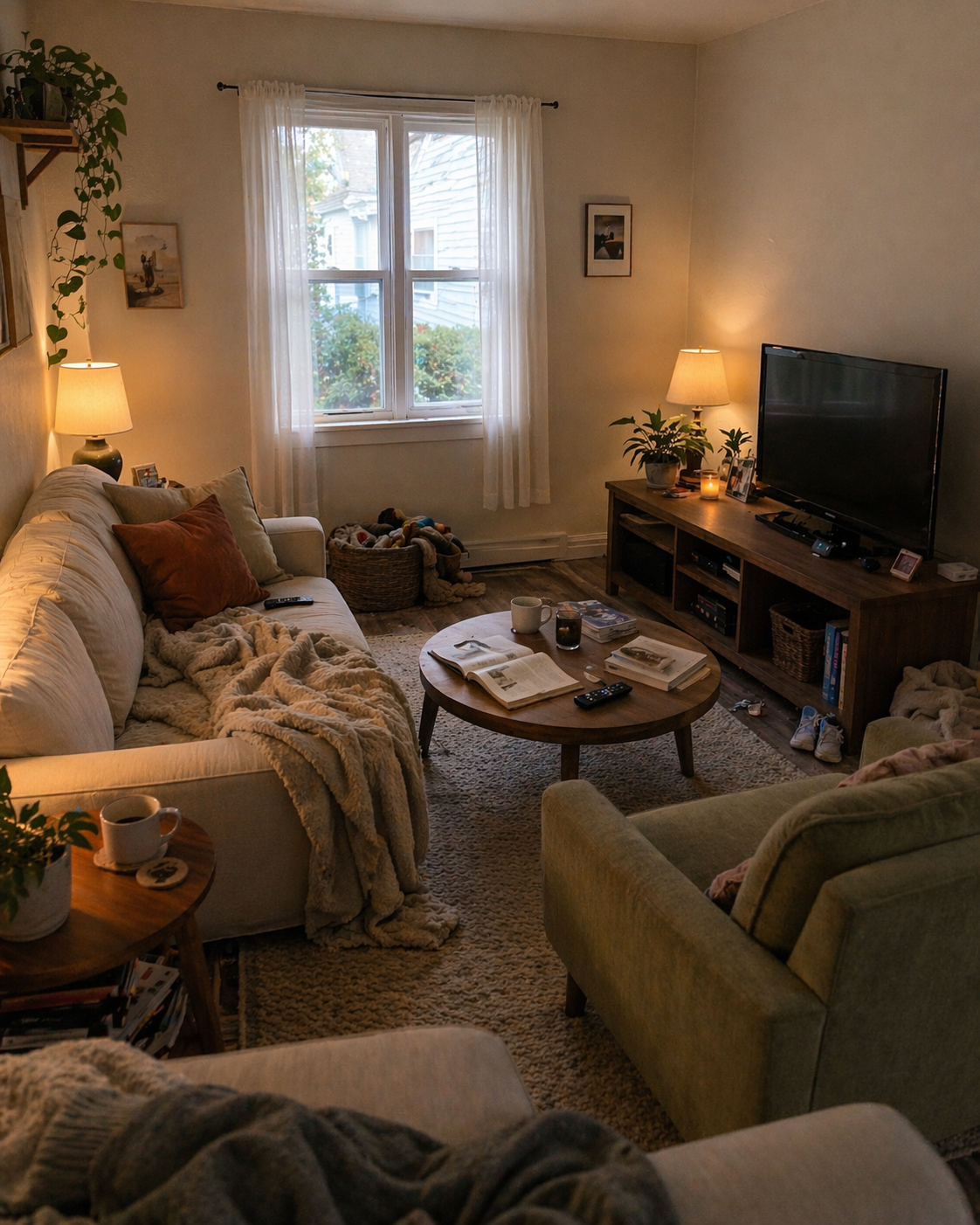
Pay attention to spacing. Leave enough room around angled pieces so they don’t feel squeezed. Even a few extra centimeters can make the layout feel open and breathable.
Color and texture matter more here than usual.
Stick to warm neutrals—cream, beige, soft taupe—and layer in natural materials like wood, linen, and knits.
These soften the visual movement and keep everything cohesive.
Lighting should follow the seating, not the walls.
Place a floor lamp near the angled sofa or chair so the glow feels connected to the layout. This reinforces the cozy atmosphere, especially in the evening.
For strong front room inspiration, treat this layout as a refinement, not a statement.
You’re not trying to make the angle obvious—you’re using it to quietly improve flow, comfort, and how the room feels to live in every day.